Among the many remarkable creatures that live in the sea leaf sheep slugs stand out as some of the most absorbing their charming appearance remarkable lifestyle and amazing biological abilities have gained the admiration of ocean lovers across the globe although they are small in size these unique sea slugs show how diverse and innovative life under the waves can be the leaf sheep sea slug is good example of natures brilliance blending features that make it seem like a combination of a sheep and a plant.
The leaf sheep sea slug, scientifically called Costasiella kuroshimae, is part of a group of marine mollusks known as sacoglossans. These tiny sea slugs are commonly found in tropical waters around countries such as Japan, Indonesia and the Philippines. Just a few millimeters in size, they can easily go unnoticed in their natural habitat; however, those who encounter them are commonly impressed by their attractive appearance and remarkable features.
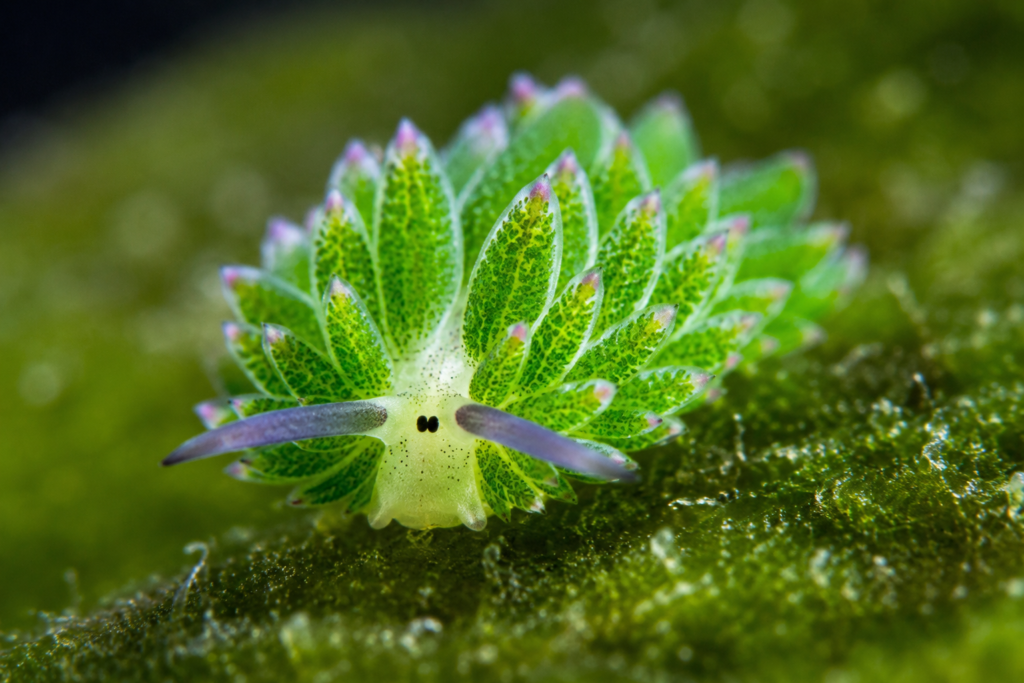
One of the most notable qualities of the leaf sheep sea slug is its similarity to a small sheep covered with leaves the slug features two dark eyes and a couple of rhinophores on its head that look like the ears of a sheep along its body are plenty of leaf like structures known as cerata these shapes not only contribute to the animals unusual appearance but also plays a key role in one of the most amazing processes found in the animal kingdom.
Leaf Sheep Sea Slug Habitat, Feeding Habits, and Photosynthesis
Leaf sheep slugs are popular for their ability to do kleptoplasty, which requires stealing chloroplasts from the algae they eat or drink and incorporating them into their own tissues. Chloroplasts are the system within plant cells responsible for photosynthesis, the process by which sunlight is transformed into energy, but still remaining functional chloroplast the leaf of the sheep sea slug develops the ability to obtain extra nutrients from sunlight.
Although the leaf sheep cannot survive solely through photosynthesis, this adjustment provides a valuable source of energy. Scientists keep studying kleptoplasty because it serves as a rare example of an animal using plant cell components for its own advantage. Learning how these sea slugs keep chloroplast function may help advance biology and biotechnology.
The diet of leaf sheep sea slugs commonly includes species of algae. Using skilled mouthparts, they break into algal cells and remove their contents. The chloroplasts are divided and stored within the cerata. These absorbed chloroplasts can keep working for varying periods, enabling the sea slugs to use sunlight even after feeding is over.
They are commonly found in shallow marine environments where acceptable algae are plentiful. They are commonly found on coral reef rocky substrates and seagrass beds. The availability of a healthy marine ecosystem is necessary for the survival of these amazing creatures. Changes in the environment that impact algae populations may indirectly affect the leaf sheep sea slug population as well.
Despite their tiny size, leaf sheep sea slugs play a role in preserving ecological balance by feeding on algae. They help regulate algal growth within their environments. Every species within an ecosystem is part of a network of relationships, and even small living beings can have significant ecological value.
Leaf Sheep Sea Slug Life Cycle and Conservation Efforts
The breeding behavior of the leaf sheep sea slug is another interesting aspect of their biology like many sea slug organisms with both male and female reproductive systems; however, they still require a partner for mating. During mating, two organisms exchange sperm and egg cells, increasing genetic variation within the populations.
After successful reproduction, leaf sheep sea slugs produce clusters of eggs attached to underwater surfaces. These eggs, in the end, develop into larvae that undergo several stages of growth before reaching mature age. The beginning phase of life in the sea is usually hard, as young larvae face many predators and environmental dangers. Only a small number make it through enough time to reach adulthood and reproduce.
Interest in leaf sheep sea slug has increased greatly in recent years because of underwater photography and social media diver and marine photographers regularly share pictures of these vibrant animals including people from different countries, to a species they would otherwise never experience. Their popularity has helped increase appreciation for marine biodiversity and the secret wonders of ocean environments.
Scientists also identify the educational importance of species like leaf sheep and sea slugs. Their unique biology offers chances to teach evolutionary concepts, ecology, adaptation, and symbiotic relationships. Studying these organisms shows that significant scientific discoveries can result from studying even the small and seemingly unremarkable organisms.
However, leaf sheep sea slug face difficulties related to the state of the marine environment. Damage to natural habitat, climate change, pollution, and ocean acidification put many ocean species at risk. Damage to coral reefs decreases water quality, interferes with delicate ecosystem relationships on which the sea slug depends, conserving marine habitats is therefore important, making sure they continue to survive.
Conservation efforts intended to protect coastal ecosystems benefit not only leaf sheep sea slugs but also numerous other marine organisms, by creating marine protected areas, decreasing plastic pollution, encouraging sustainable fishing practices, and encouraging environmental awareness education can help improve ocean health. Individual actions, such as reducing waste and helping conservation efforts initiatives, can together make a valuable difference.
The leaf sheep slug prompts us that outstanding adaptation exists across the natural world; its ability to use illegally obtained chloroplasts challenges conventional beliefs about the distinction between plant and animal functions. At the same time, its cute appearance sparks curiosity and appreciation among people of all ages.
As scientists continue to study marine ecosystems, researchers will certainly uncover additional knowledge about the biology of these amazing animals. Each discovery increases our knowledge of life’s complexity and shows the significance of protecting biodiversity . The ocean remains filled with mysteries waiting to be explored, and creatures like the leaf sheep sea slug remind us how much there is still to learn, as leaf sheep sea slugs act as ambassadors for the countless organisms that inhabit them.
In the end the leaf sheep sea slug is much more than an internet awareness. It shows a unique blend of beauty, ecological importance, and innovation from its plant-like appearance to its remarkable use of chloroplasts. This small marine mollusk shows the amazing diversity found under the waves. By gaining more knowledge about leaf sheep sea slug and supporting efforts to protect marine habitats, we can make sure that future generations will continue to wonder at these small and remarkable ocean creatures powered by sunlight.