Sea slugs are among the most amazing creatures found beneath the ocean’s surface. Even if they may not be as popular as dolphins or sea turtles. These tender-bodied sea animals possess special characteristics that may make them truly amazing. Part of a group of mollusks also called nudibranchs and similar species, Sea slugs are found in oceans across the world. They exist in a wide range of shapes, sizes, and colors, grabbing the attention of marine biologists and ocean enthusiasts. Their charm, rare survival plans, and importance in marine ecosystems make them valuable for more attention.
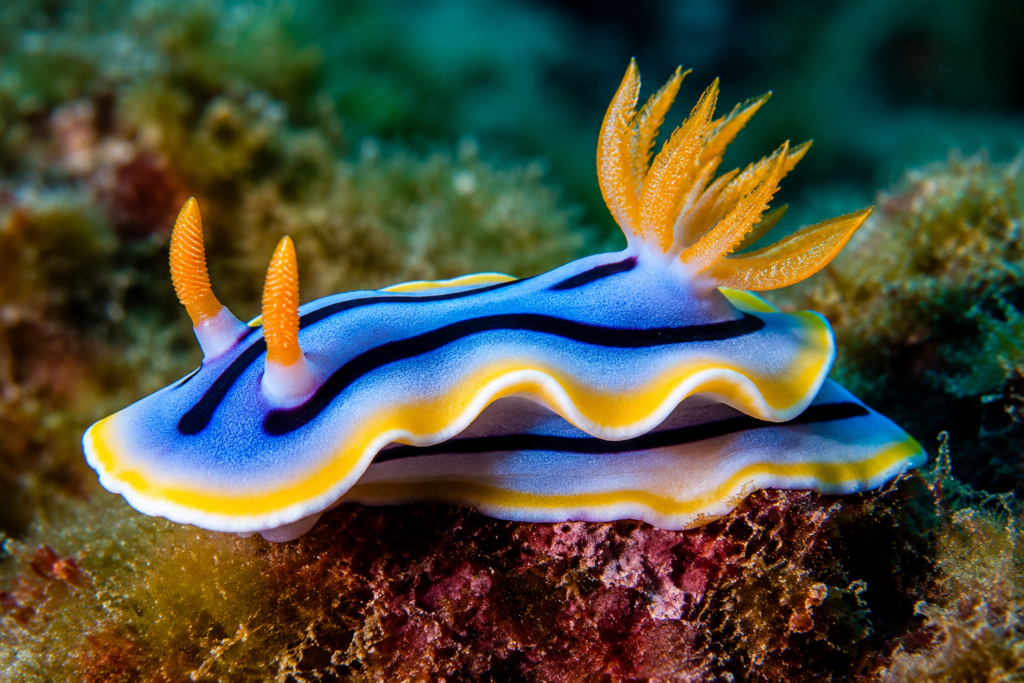
Sea Slug Colors and Their Protective Role
One of the most extraordinary features of sea slugs is their amazing appearance. not like land slugs, plenty of sea slugs show bright color and complex patterns tone of blue yellow green orange red and purple are often found on their bodies these brilliant colors are not only for decoration in most causes they provide as a heating to hunter that the sea slug maybe harmful or uncomfortable to eat this biological defence technical called as aposematism helps defend these devoted creatures from possibility threats in their marine environment.
Sea slugs are found in many types of ocean habitats, such as coral reefs, rocky shores, seagrass beds, and tidal pools. Different species have adjusted to a defined environment founded on their nutritional environment, and basic needs for survival. Some prefer shallow nearshore water where sunlight reaches the seabed, while others live in deeper parts of the sea. The skill of flourishing in various ecosystems demonstrates their ability to adapt to the environment and its importance.
What Do Sea Slugs Eat?
Sea slugs feeding habits differs greatly among species many species eat algae sponges hydroids or soft corals some sea slugs have evolved specialized diets that enable them to consume prey that other sea creatures avoid some species even take in defensive chemicals from the living things they consume and store them in their tissues these absorbed toxins give additional defense against predators displaying one of the most amazing example of adaptation in the animal world.
Out of many species of sea slugs the leaf sheep obtained extensive popularity because of its cute appearance this small marine creature looks like an animated sheep and has become popular online what makes the leaf sheep particularly unique is it ability to keep chloroplasts from the algae it eat chloroplast are the structure that is responsible for photosynthesis in plant by retaining these chloroplast within its body the leaf sheep may obtain extra energy from sunlight for a short time this rare phenomenon called kleptoplasty showcase the unique relationship between sea slug and their habitats.
Sea slug is also valuable for scientific research because of their basic nervous system. Some species have been studied widely to improve our knowledge of learning, memory, and neurological processes. Understanding obtained from sea slug research has promoted developments in neuroscience and medicine. These studies show that even small and apparently insignificant sea creatures can provide important knowledge that benefits people around the world.
Sea slug production is another interesting feature part of their biology most sea slugs are hermaphrodites meaning they possess both male and female reproductive organs However, they still need a partner to exchange reproductive cells after pairing many species lay sggs in ribbon like cluster stuck to rocks seaweed or other underwater surfaces according to the species thousands of eggs can be produced at once The larvae that hatch from these eggs often go through major changes before reaching adult life.
In spite of their remarkable adaptations sea slugs face several threats in today’s evolving world habitat damage climate change pollution and Increasing ocean acidity all have possible to result their populations coral reef damage in particular can decrease food availability and cover many species since sea slug often be environment-dependent conditions they may be mainly vulnerable to disturbances within marine ecosystem Protection efforts intended to protect the ocean and Sea-shore habitat are therefore importance unique and for securing the survival of these unique animals.
The popularity of ocean photography has brought increased attention to sea slug in over the past few years Divers and ocean photography regularly search for these brightly colored animals due to their striking impressive look and diversity social media platforms have more contributed to public interest enabling people around the world to admire the beauty of marine life that might it not remain overlooked Higher awareness can encourage backing for ocean conservation initiatives and encourage careful interaction with the marine environment.
Scientists keep discovering new species of sea slugs, highlighting how much is still unknown about the variety of sea life. Each discovery adds to our understanding of the process of evolution and ecological relationships within the marine environment. The immense size of the ocean means that a great number of secrets remain to be uncovered. Sea slugs serve as a prompt that even tiny creatures can possess amazing characteristics that are worthy of admiration and study.
Apart from their ecological role, sea slugs explain the importance of biodiversity. Each species helps maintain the balance of the marine ecosystem in some way, whether through nutrient cycling, predator-prey relationships, or helping maintain a healthy habitat, defending biodiversity, ensuring that these ecosystems stay resilient and capable of supporting life. These conservation sea slugs and their natural environments ultimately help numerous other marine living things as well.
Sea slugs possess a level of complexity and beauty that often goes unnoticed by many, from their brilliant colors and specialized feeding habits to their remarkable defense strategies and scientific importance. These fascinating marine creatures continue to captivate researchers and nature lovers alike. Creatures such as a leaf sheep show that the sea is filled with marvels that challenge our knowledge of life and adaptation. By exploring the fascinating world of sea slugs and helping to safeguard ocean ecosystems, we can help guarantee that coming generations will also have the chance to appreciate these amazing residents of the ocean.
Sea slugs may be tiny, but their influence on science ecology captures the public imagination strongly. Their life reminds us of the beauty and creativity that can be found in unusual places even among the small animals drifting slowly across the sea floor. As the discovery of the marine world continues, sea slugs will certainly remain symbols of the amazing diversity and hidden mystery under the waves.