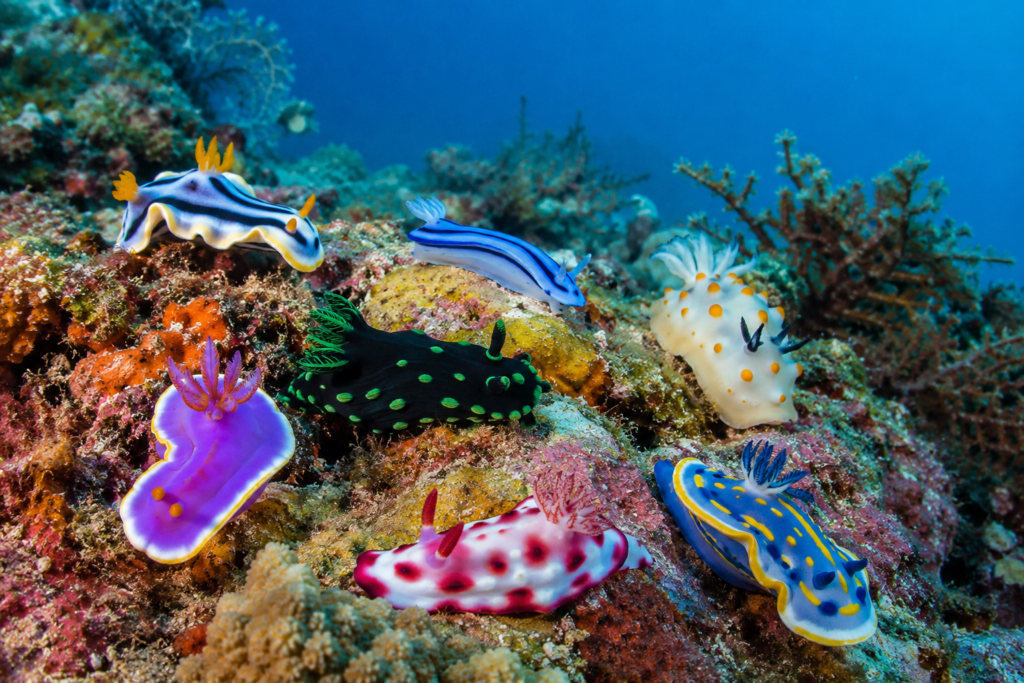
Sea slug species are beautiful marine animals that can be found in oceans throughout the world. Although their bodies are soft and unprotected by shells, They have evolved impressive ways to adapt and survive in the sea. Because of their stunning appearance and unique adaptations, sea slug species have become a favorite focus of marine biology research and underwater photography.
Marine researchers have identified over 3,000 sea slug species, and further exploration of the deep ocean keeps adding to this number. The smallest sea slug species measure only a few millimeters, while the largest can reach lengths of over 30 centimeters.They may look harmless, but many are equipped with chemical defenses and camouflage that provide effective protection against predators.
What Are Sea Slug Species?
Sea slug species are part of the mollusk family of marine invertebrates, which also includes creatures such as snails, clams, squid, and octopuses. Unlike most land slugs, sea slugs have adapted to life underwater and are found in a wide variety of marine habitats.
Most sea slug species either lack an external shell altogether or contain only a tiny shell inside their bodies as a result of evolution. Because they lack a hard shell, its depend on natural adaptations such as camouflage, toxic substances, and warning coloration to avoid predators.
Sea slug species have soft, movable bodies that enable them to glide across coral reefs, seagrass beds, rocky areas, and sandy ocean floors. Sea slug species have soft, movable bodies that enable them to glide across coral reefs, seagrass beds, rocky areas, and sandy ocean floors.
Where Are Sea Slug Species Found?
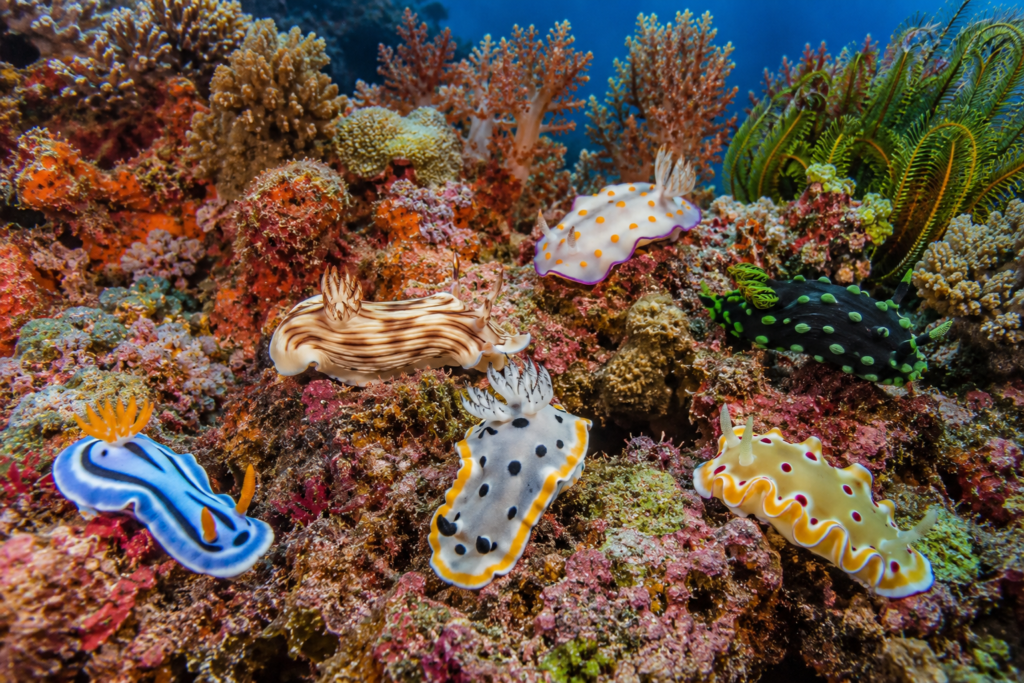
Sea slug species have a global distribution and live in almost every ocean.They are frequently found in tropical and subtropical marine habitats, where coral reefs meet their needs for food, safety, and reproduction.
Numerous sea slug species inhabit sunlit coastal areas, but some have adapted to life in cold polar seas and ocean depths reaching thousands of meters.
The following regions are known for having the greatest variety of sea slug species:
- The Indo-Pacific Ocean
- The Philippines
- Indonesia
- Japan
- Australia
- The Caribbean Sea
- The Mediterranean Sea
- Parts of the Atlantic and Pacific Oceans
Various sea slug species are adapted to specific habitats that provide the right food and living conditions. Some species seek protection among coral formations, while others thrive in rocky habitats, mangrove ecosystems, seagrass beds, or sandy ocean floors
Main Types of Sea Slug Species
The classification of sea slug species is based on their body structure, eating habits, and evolutionary development.
1. Nudibranchs
Nudibranchs are the most popular because of their vivid colors and unique designs. Many sea slug species display brilliant colors to alert predators that attacking them could be dangerous.
Their colorful bodies act as a warning to predators, making it clear that they possess powerful chemical protection. Some sea slug species absorb toxins from their prey, making them less attractive to predators.
2. Sacoglossans
Sacoglossans are a group of sea slugs that feed mainly on algae and other plant-like marine organisms. The popular leaf sheep (Costasiella kuroshimae), recognized for its charming look, belongs to this group.
One extraordinary feature of some sacoglossans is kleptoplasty, which enables them to temporarily hold chloroplasts obtained from algae. These chloroplasts continue to generate energy from sunlight for a short period, helping the sea slug survive when food is difficult to find.
3. Sea Hares
Sea hares typically reach a larger size than the majority of sea slug species. Sea hares have soft bodies with prominent flaps that resemble a rabbit’s ears, leading to their well-known name.
A common defense strategy of many sea hares is to emit a cloud of purple ink when faced with danger. By reducing a predator’s ability to track it, the ink allows the sea hare to escape more easily.
4. Bubble Snails
Bubble snails retain a small, fragile shell that is often hidden beneath their body tissue, setting them apart from many other sea slug species. Their body structure allows smooth underwater movement while preserving some protection from their remaining shell.
Physical Characteristics of Sea Slug Species
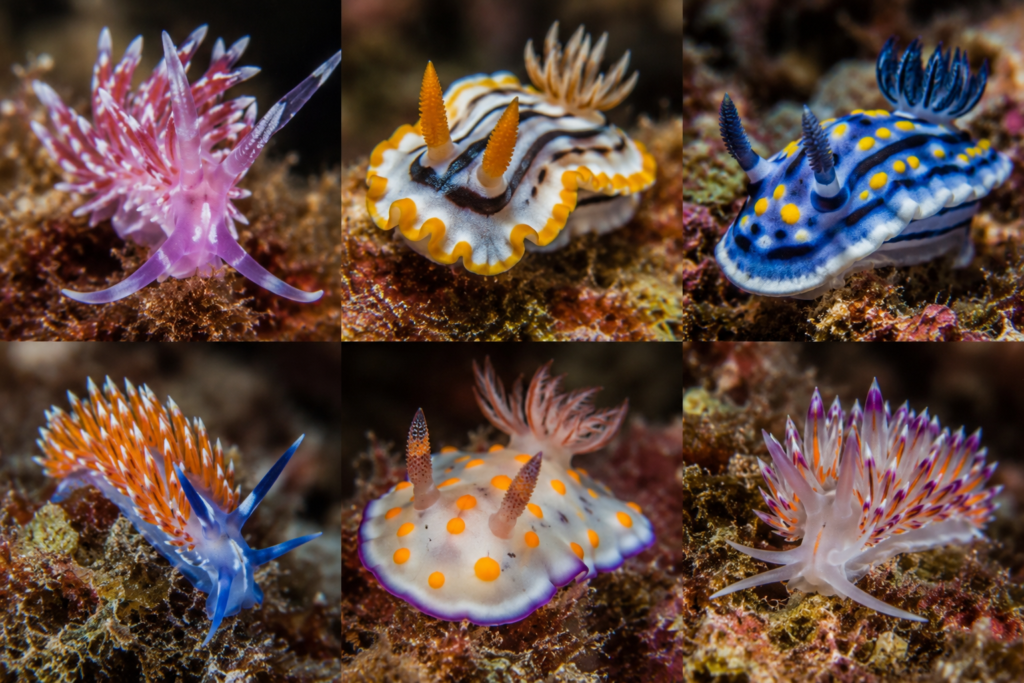
Sea slug species show great diversity in their body shape, color, and overall appearance. Some species are plain and smooth, but others have numerous cerata that play important roles in breathing, protection, and concealment.
Many species also have a pair of sensory organs called rhinophores on their heads. These specialized organs sense chemicals in the marine environment, assisting sea slugs in finding food, locating partners, and avoiding predators.
Their coloration varies widely, with some species appearing nearly transparent while others feature brilliant combinations of blue, green, yellow, white, black, pink, and orange. Some species use their colors to warn predators about toxic chemicals, whereas others rely on similar colors to hide among corals, algae, and sponges.
Without the protection of a shell, sea slug species Their adaptable body shape helps them escape into confined spaces that predators cannot easily enter.
What Do Sea Slug Species Eat?
Their diets are highly specialized, with each group of sea slug species feeding on specific marine organisms.
Sea slug species consume a wide variety of foods, including algae, sponges, soft corals, hydroids, sea anemones, bryozoans, and tiny marine animals, depending on the species.
One remarkable characteristic of many sea slug species is that they eat only one or two specific prey types throughout their lives. Their specialized feeding habits reduce competition with other marine life, yet they become highly dependent on healthy habitats for survival.
Rather than being affected by sea anemone stinging cells, certain nudibranchs store these cells and use them as a natural defense mechanism.
Reproduction and Life Cycle of Sea Slug Species
A specialized reproductive system allows sea slug species to successfully maintain their numbers in many ocean environments. A large number of sea slug species have a unique reproductive system in which one individual contains both male and female organs. Even with both male and female reproductive systems, most sea slugs still require a partner for reproduction.
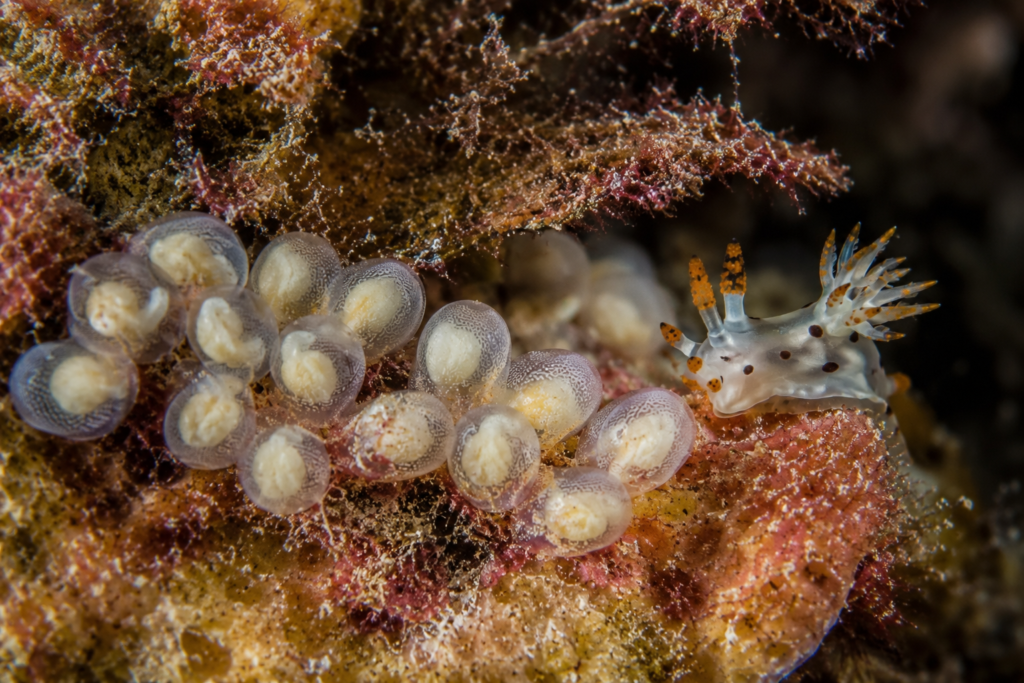
Mating involves two sea slugs sharing reproductive material, with both individuals later having the ability to lay eggs. Many sea slug species attach their eggs to underwater objects, creating beautiful ribbons on rocks, algae, and coral surfaces.
The early stages of many sea slugs begin as tiny larvae that are transported through the ocean after leaving their eggs. As their bodies mature, they become adult sea slugs and establish themselves in habitats that support their survival.
Different sea slug species have different lifespans, which are influenced by their environment and biological characteristics. Some small species complete their life cycle within a few months, while larger sea slug species can live beyond a year.
Over time, sea slug species have evolved unique survival strategies that allow them to thrive in the marine world. The absence of a protective shell has led many sea slug species to develop unusual biological defenses against predators.
Chemical Defense
Many species release or store chemical compounds that make them less attractive and safer from predator attacks. Certain nudibranchs use chemicals obtained from their food sources, including sponges and corals, as a form of defense.
The stored chemicals make them unpleasant or harmful, reducing the chances of being eaten by predators. Their colorful bodies send a warning message to other animals, showing that they may be dangerous or unpleasant.
Camouflage and Mimicry
Some sea slug species survive by using camouflage that helps them merge with their surroundings. Their natural coloration helps them merge with habitats containing coral, algae, rocks, and other forms of marine life.
Their ability to blend in helps reduce the risk of attack and makes it easier to approach prey without warning.
Certain species copy the physical features of dangerous animals as a way to defend themselves. The ability to look like poisonous animals allows non-toxic sea slugs to escape potential threats.
Solar Energy Ability
One of the most remarkable adaptations can be seen in certain species of sacoglossan sea slugs. These animals can steal chloroplasts from algae through a process called kleptoplasty.
After being taken from algae, the chloroplasts continue functioning inside their bodies and help create energy from sunlight. Although they cannot depend on this process alone, it provides a helpful energy boost during periods of food shortage.
Among sea slug species, the leaf sheep is one of the best-known examples of this remarkable algae relationship.
Importance of Sea Slug Species in Marine Ecosystems
Sea slug species have an important ecological role in supporting the balance of underwater ecosystems. Even though they are tiny animals, their presence and activities influence the balance of underwater habitats.
Many sea slug species contribute to ecosystem balance by reducing excessive algae growth through feeding. By limiting algae expansion, sea slugs support coral reef health and maintain balance among marine organisms.
By studying some sea slug species, scientists can gain insights into the condition of marine ecosystems. As sea slugs are sensitive to their surroundings, their survival or disappearance can provide clues about the condition of marine habitats.
Certain substances produced by sea slugs may have medical importance, which is why researchers continue to study them. Scientists are exploring ocean-based compounds that could potentially be used in the development of new medicines.
Predators of Sea Slug Species
While sea slugs have evolved ways to defend themselves, they continue to face challenges from marine hunters. Many ocean predators feed on sea slugs, such as fish, crabs, sea spiders, and larger marine animals.
Sea slugs have evolved different protective abilities that help them survive underwater. Certain sea slugs use chemical protection, while others survive by remaining unnoticed through camouflage and small hiding spots.
Bright coloration allows these sea slugs to defend themselves by making predators aware of possible danger. This approach is known as aposematism, where an animal’s appearance communicates a warning message to others.
Threats Facing Sea Slug Species
Like other ocean creatures, sea slug species are influenced by changes occurring in marine environments. Despite their tiny size and limited attention, sea slug species need healthy marine environments for their survival.
Ocean Pollution
Pollutants such as plastic debris and toxic chemicals can negatively affect the environments where sea slugs survive. Pollution can negatively affect sea slugs by limiting the availability of their natural food.
Climate Change
Sea slug populations can be affected when rising temperatures and changing ocean conditions disturb their natural habitats.
Damage to coral reefs and marine habitats can reduce the safe areas needed by sea slug species for feeding and survival.
Human Activities
Human activities such as coastal construction and damaging fishing methods can put many marine species at risk.
Efforts to preserve coral reefs, control pollution, and strengthen marine conservation are important for the survival of these special species.
Interesting Facts About Sea Slug Species
• Some sea slugs can incorporate pigments from their food, helping them match coral, algae, and other surfaces around them.
• The leaf sheep sea slug looks similar to a tiny underwater sheep because of its green, leaf-like structures.
• Some nudibranchs can collect and reuse the stinging cells of their prey as a defense mechanism.
• From warm reef ecosystems to cold underwater depths, sea slugs inhabit a variety of ocean environments.
• Many species are extremely small and require underwater photography equipment to observe clearly.
Are sea slugs dangerous to humans?
The majority of sea slug species do not pose any danger to humans. The main purpose of their chemical defenses is survival against marine hunters, not protection from people. However, sea slugs should not be handled because their soft bodies can easily be damaged.
Can sea slugs live outside water?
Sea slug species need marine ecosystems with saltwater because their bodies are specially adapted for ocean life. Unlike common terrestrial slugs, sea slugs need underwater habitats and cannot survive on land.
How long do sea slugs live?
Their lifespan is determined by the specific species and its natural conditions. Small sea slug species generally have shorter life cycles, but larger species can live longer when their habitat supports them.
Why are sea slugs so colorful?
Their colorful patterns are useful for several reasons, including survival, protection, and attracting potential mates.