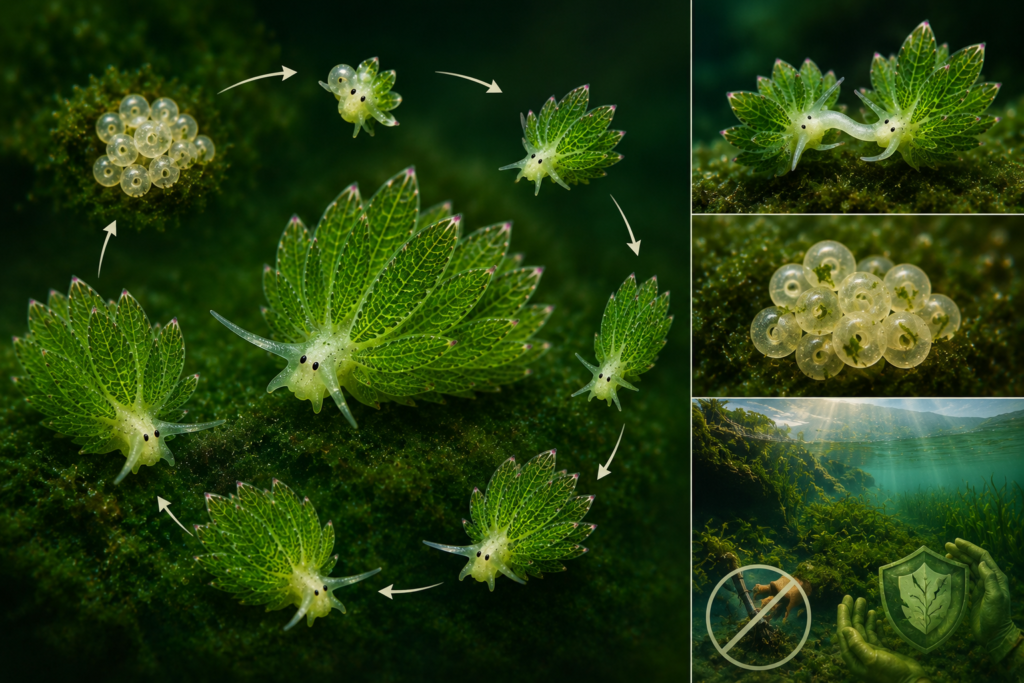
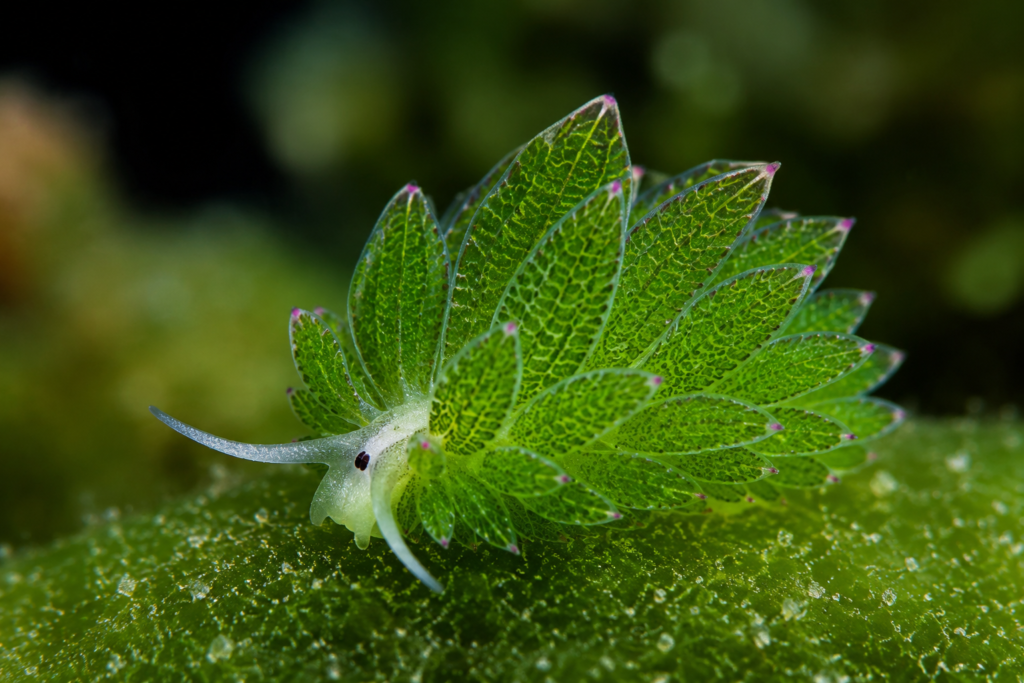
The Leaf slug is one of the most amazing marine animals lives in the ocean Although it is known as Leaf sheep sea slug it is considered a small sea slug that is part of special group of marine mollusks officially called Costasiella kuroshimae this amazing creature has attracted researchers and outdoor enthusiasts because of its remarkable appearance and outstanding capability to utilize sunlight for energy usually just a few millimeter long the leaf slug look like a small green sheep enveloped with leaf -like extensions these structures not only give it a cute appearance but also play a key role in its survival.
Unlike many sea slug the leaf slug has evolved an amazing connection with algae after eating on specific algae species it keeps small chloroplasts inside its body chloroplasts are the parts of plant cells accountable for photosynthesis the method that turn sunlight into energy this remarkable adaptation enable the leaf slug to generate a part of its own nutrients through sunlight Even though it still relies on algae for survival this amazing capability allows it one of the few animals qualified of gaining from photosynthesis.
Leaf Slug: Habitat, Diet, and Solar-Powered Ability
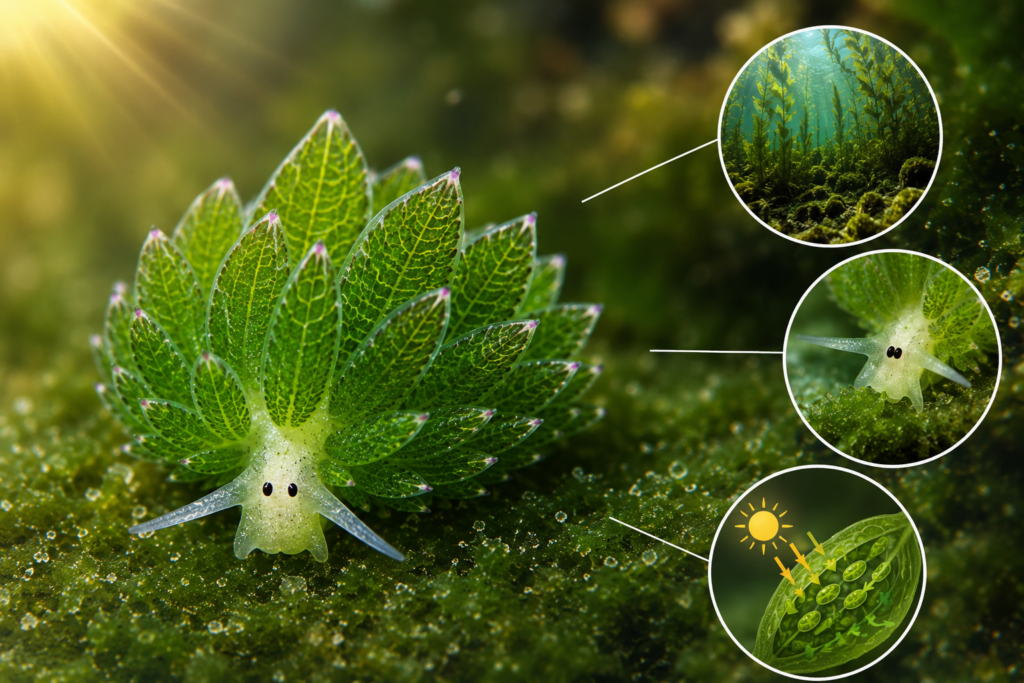
Leaf slugs commonly live in the warm coastal waters of the Indo-Pacific area. They have been found in countries such as Indonesia, Japan, and the Philippines, as well as in surrounding coastal areas. These marine animals choose shallow waters where sunlight easily reaches the ocean bed. They are mainly seen living among rocks, coral reefs, and seagrass beds, where algae grow abundantly. These environments give both food and shelter, making them perfect habitats for leaf slugs.
Their vivid green color enables them to blend nearly perfectly with nearby algae. This biological camouflage helps defend them from predators, such as tiny fish, crabs, and other sea creatures. Due to their very tiny size, staying hidden is important for survival. Their leaf-like body projections, called cerata, further improve this disguise by making them look like small pieces of underwater vegetation.
The feeding habitats of leaf slugs are very specific, unlike many sea slugs that eat a range of marine organisms. Leaf sheep eat almost exclusively on a particular species of green algae. Using their expert mouthparts, they cut through the algae and extract the cell contents while eating. They carefully divide the chloroplasts from the remaining plant material without harming them.
In the place of digesting these chloroplasts, the leaf slug keeps them within their cells of its cerata at one time inside its body. The chloroplasts keep working on photosynthesis for a few days or even several weeks; researchers call this amazing method kelptoplasty, meaning “stolen chloroplasts.” Although kleptoplasty, the saved chloroplasts take in sunlight and create sugars that give extra energy to the leaf slug
The solar powered capability is one of the most outstanding adaptations in the animal kingdom during photosynthesis cannot fully exchange the slugs require for food it supports the animal remain alive over the period when algae are limited the additional energy helps normal body functions and grow its possibility of living in changing environmental conditions this uncommon combination of animal and plant-like characteristics create the leaf slug a key role subject of scientific found.
Scientists are proceeding to study how leaf slugs keep living chloroplasts in their bodies without removing them. Insight into this biological connection may help with upcoming discoveries. Inherited cell biology and sustainable energy exploration show how leaf slugs can create surprisingly creative survival methods.
Leaf Slug: Life Cycle, Reproduction, and Conservation
The life cycle of the leaf slug is brief but very fascinating. Similar to other sea slugs, it starts life as a small egg. Even though the leaf slug usually lives for only a short time, it goes through different stages before achieving adulthood.
Leaf slugs are both male and female; however, they cannot reproduce themselves. When mating, two leaf slugs share sperm, helping both of them to create fertilized eggs. This method boosts genetic diversity and supports making better future generations.
While mating, the female reproductive system produces clusters of small eggs across green algae or close to underwater plants. The eggs are organized in a soft, ribbon-like pattern that stays connected until they emerge. Their transparent appearance helps defend them from predators.
After a few days, the eggs emerge into microscopic larvae. At this point, the young leaf slugs still look different from the adults. They drift with ocean currents and eat small organisms located in seawater.
As they develop, the larvae settle on the seafloor after finding proper green algae, and they start eating a particular algae species and grow their famous leaf-like appearance. Slowly, their bodies become vividly green as they keep chloroplasts in their cells.
The leaf slug obtains its amazing solar-powered capability at this stage. It takes chloroplasts from algae through kleptoplasty and keeps them in its cerata; these chloroplasts keep doing photosynthesis, producing additional nutrients from sunlight.
Even though photosynthesis gives extra energy, the leaf slug still relies on algae for its primary source of food. The saved chloroplasts easily support life longer during times when algae is limited.
The average life duration of a leaf slug is generally from one month to a year. At this time, it uses most of its life growing, feeding, avoiding predators, and reproducing. Its camouflage plays a key role in protecting it.
The leaf slug experiences numerous threats in its natural habitats. Climate change is impacting sea temperatures, which can decrease the production of algae and harm the coral reef ecosystem because leaf slugs depend on strong algae; these developments immediately impact their survival.
Sea pollution is another significant difficulty, as plastic waste and damaging chemicals dirty coastal water, where leaf slugs stay. Habitat damage due to development also decreases secure places where they can eat and reproduce.
Researchers keep researching the leaf slug because its unique connection with chloroplast is unlike that of nearly any other animal. This method may result in future findings in biology genetics in green energy research.
Preserving marine habitat is important for the survival of leaf slugs, protecting coral reefs, seagrass beds, and coastal ecosystems, which support and defend not only that remarkable species but also numerous other marine animals that depend on the same environment.
The sea slug is an excellent example of nature’s creativity. Its capability to merge animal habits with plant-like photosynthesis helps it be one of the most amazing ocean creatures ever found, although it is small, it shows us that each living organism plays a key role in supporting a healthy sea ecosystem.